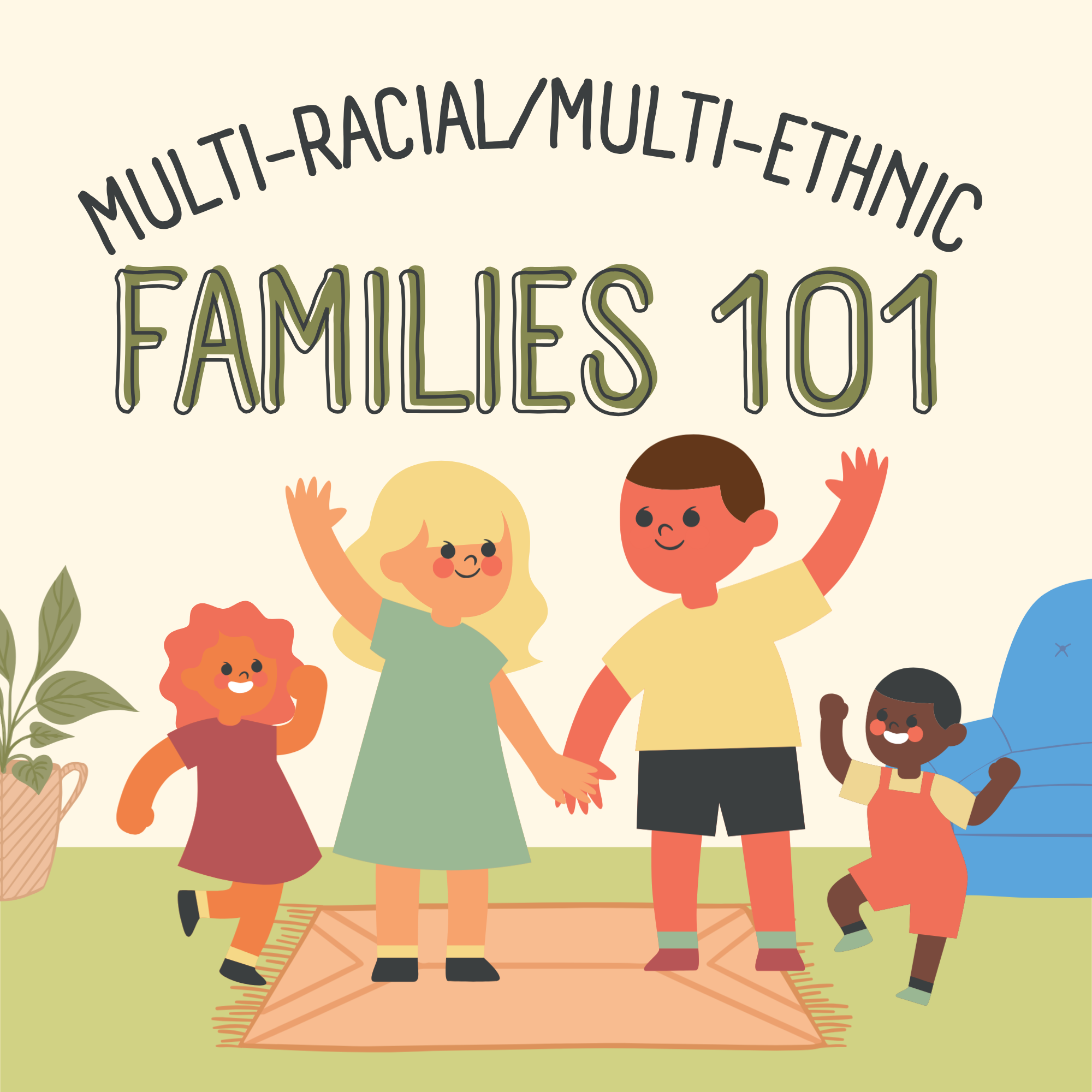
How should we navigate public situations when a total stranger approaches to ask about the racial composition of our families? I’m gonna do my best but every bone in my body just wants to firmly state, if not yell, “What makes that any of your business?” I am inspired to explore how many in American culture continue to cling to ideas most of us have moved well past.
The fact is that humans on earth today share 99.9% of their genetic make-up with any other human on the planet. The superficial traits of skin color, hair texture or color, or even height within and between groups is attributed to less than 0.1% of our genes. The practice of slavery made it handy to tell ourselves that those we enslaved were less than human, but science just doesn’t bear this out.
Our unique cultural practices are often central to our distrust of one another. Our cultures unify us through language, food, belief systems, celebrations, family structure, music, humor, and even fashion. The “other” with power might expect us to give up what we find familiar and even what we cherish. Conquering groups (think Spanish and Portuguese Conquistadors in the Americas) liked to “cleanse” a conquered land of all vestiges of its historic culture often in the name of religious conversion (the gold/corn/tomatoes/horses/spices were just a perk, of course). With weapons including germ infested blankets and guns, it isn’t hard to imagine how motivated folks were to “go along to get along,” sacrificing much of their culture along the way. Even to this day, the light skin of their European conquerors is highly valued over the darker skin of the indigenous peoples in many Central American countries.
Most cultures hold onto bias against select other cultures, often because of historic events and hatreds. This is not a trait of only white-skinned Europeans. The Chinese hate the Uyghurs and those from Henan province. Here in Arizona, there is historic enmity between Dine’ and Hopi tribes based on actions of the Federal Government over a hundred years ago. Parents and neighbors teach their children whom to hate, whom to fear, and whom to try to deny access to “life, liberty, and the pursuit of happiness” in one way or another. When those teachings move into movies, the internet, and books, parents lose a bit of control over what their children learn about “the other” and even about themselves.
I was raised in the Jim Crow South where little black kids never got to sit close to the movie screen at the Granada Theater in Dallas; they had to sit in the balcony. Though there was a lovely working class black neighborhood just a few miles to the northwest, I never played with any of the kids from there in the pool at Vickery Park. Water fountains were marked for “Whites Only” and the lunch counter at any diner bore a sign that read: “We retain the right to refuse service to anyone,” meaning whites only would be served. My high school didn’t integrate until 1967. Notice: my white privilege gave me entrance to both the Granada and Vickery Park and not since my teens have I ever been followed by a security guard while shopping (I deserved it, btw, got caught shoplifting once but charges were not pressed. How many black kids can say that?). I offer all this only to disclose my own bias and awareness of my white privilege as I presume to explore the foundations and expressions of racism in our country. I survived my alcoholic, domestic violence threatened home life partly because our housekeeper, Claudy, and the janitor at Zion Lutheran School, Mr. Buford Lewis, both black, treated me gently and offered me role models of kindness and dignity.
Many of us fiercely cling to the good ol’ days when everyone “knew their place.” Implicit bias (it’s just the way things are) is active quietly in the background even when overt signs of oppression, insult, or discrimination are absent. We are all subject to the impressions we gather from how our parents behave, the images we find in movies, and the language normalized in day-to-day interactions. I remember learning late in life how derogatory the term “squaw” was only when the name of a local mountain was changed to something less pejorative. I grew up hearing that word in any number of Westerns. It was tossed about so casually, it didn’t occur to me it carried a meaning I would never have intended. So to paraphrase Maya Angelou, when we know better, we can do better.
I’m going to indulge in an exploration of what contributes to that stranger’s feeling that they have a right to ask in the first place:
1. They are looking for an excuse to judge an interracial marriage.
2. They are looking to embarrass you and your child about shared biological ancestry.
3. They are wondering how you could love a child that looks like that.
4. They are genuinely concerned about a girl in a man’s company when she doesn’t look like him.
5. They want to celebrate your unique family with you.
My initial idea notwithstanding, it is probably best to assume good intentions and respond accordingly; thereby indirectly and gently shaming the person who intrudes. Some of these are snarkier than you might be comfortable with, however. So, I’ll keep it simple and just offer a few suggestions for responses to any variation of “Are these your children?”:
1. They are. Aren’t they beautiful? Thanks for asking.
2. They are. We love it when strangers are drawn to how beautiful we are.
3. They are. Are those yours?
4. They are. Are you looking for childcare work? We’re always looking for like-minded people to expand our circle of love for the kids.
5. They are. Where are your children? Do you have pictures to share of them?
6. They are. What would you like to know about us?
7. They are. If you have time I can tell you all about us.
8. They are and this coach is lucky to have them. They’re good and they love the game!
9. They are.
10. Crickets
These are your boundaries to define. That stranger has crossed a line but you are free to send them back over it, figuratively. I spent my youth trying to explain to racists what I knew about the few people of color I knew well and even loved. I hold no optimism about educating a racist to a more informed, respectful position so I would encourage you to keep these interactions brief and non-confrontational. Try to resist my snarky ideas but it was fun coming up with them…but if your train is going south and their train is heading north…never to cross paths again…go for it!
Peace,
Cathy